What it actually takes to build New Zealand's EV charging network
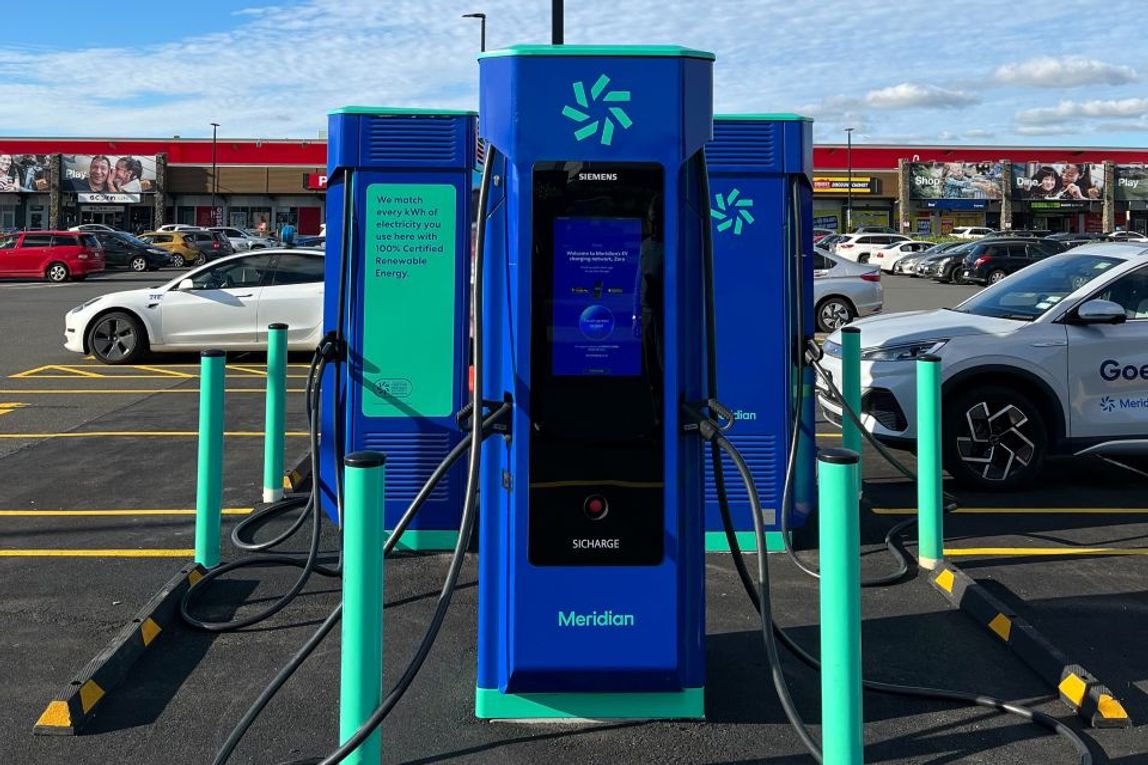
There’s a version of public EV charging infrastructure that looks, from the outside, pretty straightforward. A company finds a site, installs some hardware and drivers plug in. The charger is there. It works. Job done.
That picture is not wrong, but leaves out almost everything that made it possible.
Getting a public fast charger in the ground in New Zealand involves a chain of decisions, stakeholders, lead times and coordination that most drivers never see. Understanding that chain helps explain why expanding the network takes the time it does and why the challenge of building it is considerably more complex than it might appear from the outside.
Vaughan Buckingham is the EV Project Delivery Manager at Meridian Energy and has been working through that complexity firsthand.
"What it might look like to the general public, is just a fancy power point that's been installed in the ground and away you go," says Vaughan.
The reality is very different.
The part everyone sees is the easy part
When a new charging site goes live, the visible activity happens fast. The electrical reticulation, the trenching, the concrete and the hardware installation. It’s skilled work, but it’s not where the time goes.
What takes months is everything that has to happen before any of that can start!
The single biggest constraint in rolling out new EV charging infrastructure in New Zealand is not the charger itself. It’s the power upgrade required to run it. Fast chargers draw serious power. A typical DC fast charging site might require 500 kW, 750 kW or more. Connecting that load into the existing electricity network means working with the high voltage infrastructure and the poles and wires owned and operated by electricity distribution businesses, known as EDBs.
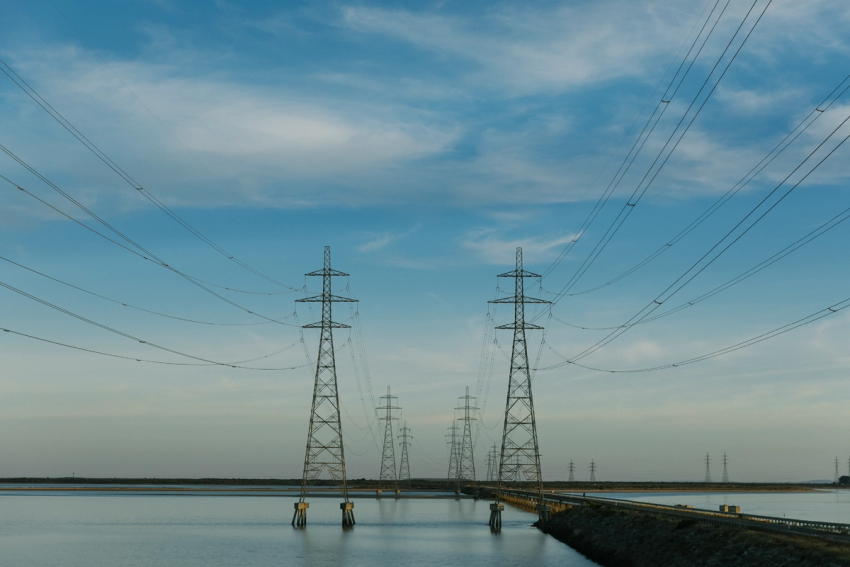
EDBs are the network companies that manage electricity distribution across different regions. Getting a power upgrade designed, approved, resourced and completed through an EDB is where project timelines consistently blow out. These companies are working through high demand across multiple projects simultaneously and the queue is not something that can be jumped. Waiting months is not unusual and this sits on the critical path of every new site.
As Vaughan puts it, the electrical reticulation itself only takes a few days.
"It’s the power upgrade that takes months,” says Vaughan. “You're working with a fragmented set of stakeholders to do these really heavy power upgrades, connecting into the network. That's by far and away the longest bit."
Finding the right site is harder than it looks
Before any power upgrade can even be scoped, the right location has to be identified and secured. That process has its own challenges.
A good charging site needs to be in the right place for the drivers who’ll use it, with appropriate amenities nearby and enough physical space to accommodate the infrastructure. It also needs a landowner willing to commit their property to a long-term commercial arrangement. These are not short-term leases. Charging sites are long-life assets and agreements typically run for 10-20 years. Finding a landowner comfortable with that kind of commitment in a location that actually works, is a conversation that can’t be rushed.
Until recently, resource consents added another layer. From May 2026, most EV charging installations became a permitted activity under New Zealand planning rules, removing the need for council sign-off in most cases. That’s a genuine improvement and a change the industry’s been pushing for.
The removal of the resource consent requirement shortens one part of the chain. The network upgrade bottleneck remains.
Global supply chains add another layer of waiting
Once a site is confirmed and the design is complete, equipment has to be ordered. This is where global logistics enter the picture and they add significant time to every project.
The transformers required to support high-power charging installations are owned by the EDB, not by the charger operator. EDBs typically order on a just-in-time basis, meaning the order goes in after a project is confirmed and funded. Lead times from overseas manufacturers commonly run to around six months. Combined with shipping from overseas suppliers, which carries its own 13-week baseline on top of manufacturing time, the wait for a transformer alone can define how long a project takes from approval to installation.
The chargers themselves also come from overseas manufacturers and carry their own lead times. The components are standardised to work with the New Zealand grid, so it isn’t a matter of custom engineering. It’s simply a matter of waiting in line. Vaughan describes the cumulative effect clearly.
"The lead-in time to get all of these activities done can take longer than building some utility-scale solar farms," says Vaughan.
That comparison underlines just how resource intensive this work actually is and how far removed the reality is from the perception of simply installing a piece of hardware on a footpath or in a car park.
Meridian works with distributors and communicates pipeline demand well in advance to keep things moving as efficiently as possible. But the global nature of the supply chain means there’s an inherent delay built into every new site, regardless of how well the local project is managed.
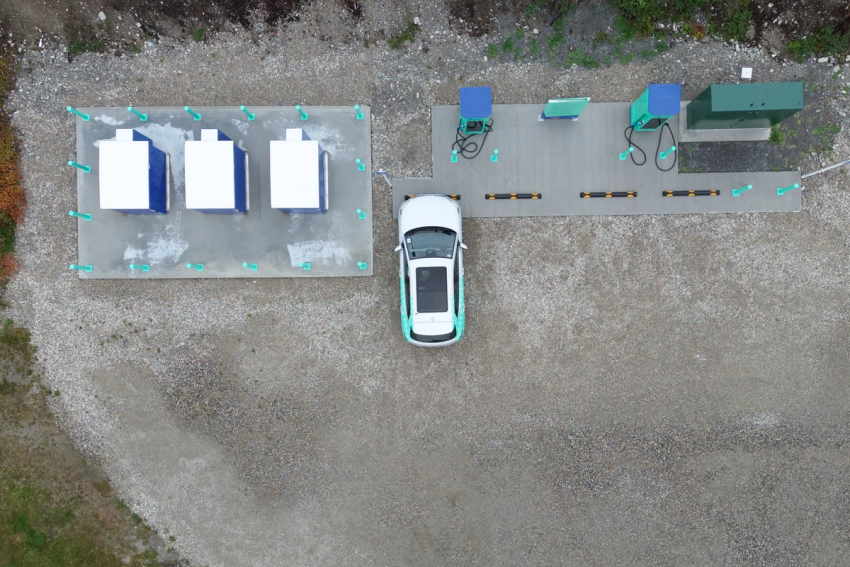
Why rural and remote locations are even harder
Everything that makes a straightforward urban site complex becomes even more complicated in rural or remote areas.
Sites are harder to find and often involve more land access conversations. The existing network infrastructure may require more substantial upgrades to support fast charging loads, because the grid in those areas wasn’t built with this kind of demand in mind. And the economics of a site that will see lower utilisation in the near term have to be weighed carefully against the real and significant value of providing coverage where EV drivers currently have none.
New Zealand's geography makes this particularly apparent. Long stretches of highway between towns, significant elevation changes and the importance of routes through areas like the central North Island or the top of the South Island mean that coverage in those corridors is critical. For EV travel to feel genuinely accessible across the country, those gaps need to be filled.
The Zero network is being built with that long view in mind. A charger installed today is expected to serve drivers for 10-20 years. Decisions about location, power level and the number of bays at a site are made with future demand in mind, not just current use. Getting those decisions right at the start matters, because retrofitting capacity later carries its own costs and delays.
How decisions about charger location and capacity get made
The decisions that go into each new site, where it goes, how much power it provides and how many bays it includes, draw on a combination of data and on-the-ground judgement.
Traffic patterns, existing stop behaviour, proximity to amenities and gaps in the current network all feed into site selection. A highway stop serving drivers on long-distance journeys needs to turn vehicles around quickly, which points toward higher power. A town centre site where someone might spend an hour at a café can deliver the same practical outcome with a lower power output.
The number of bays is planned with future demand in mind. A site that works well with two bays today might create queuing frustration in three years as EV uptake grows. Once the groundwork is done and the power is connected, adding bays is considerably more straightforward than establishing a new site from scratch.
Meridian reflects this kind of thinking across all our Zero network sites, with locations chosen to support both everyday charging and longer journeys across Aotearoa.
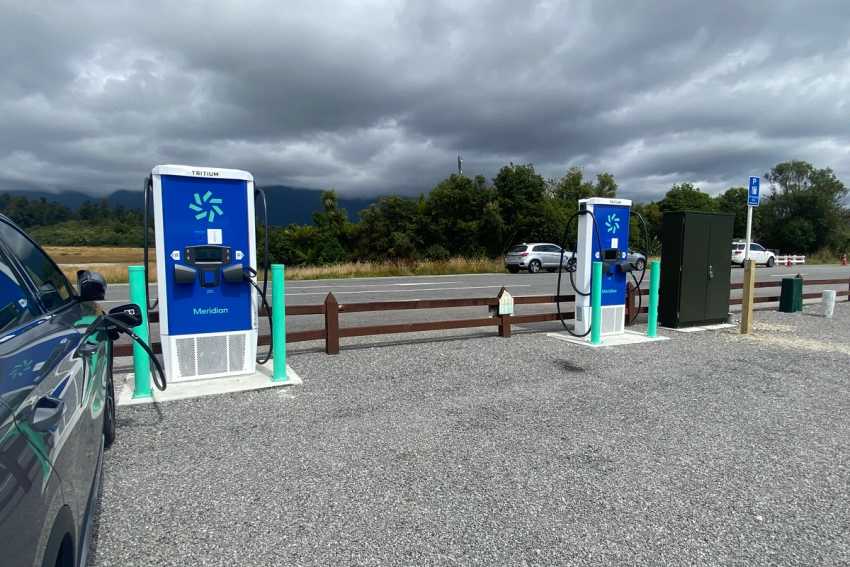
Chargers going in the ground as fast as possible
It’s worth being clear about what is and isn’t limiting expansion of New Zealand's charging network.
The constraint is not demand. EV uptake is growing and the case for a denser, more capable public network is well understood across government, industry and the companies building it. The EECA public EV charger dashboard shows the progress being made and the scale of what needs to be done to meet the government's target of 10,000 public charge points by 2030.
The constraint is time and coordination. Each new site moves through the same chain: land secured, design completed, EDB upgrade commissioned, equipment ordered, installed and commissioned. Each of those steps has its own timeline and its own dependencies. Running them in parallel, where possible, planning pipeline demand further in advance and working constructively with network companies to improve their efficiency, are all levers that are being pulled.
Regulatory change is making a difference. Removing resource consents from most installations has shortened one step. If the EDBs are able to scale their capacity to process and complete network upgrades more quickly, that’s where the most meaningful acceleration will come from.
What the network looks like in five years
The version of New Zealand's public charging network that exists in five years will be substantially different from today. Not just larger, but more consistent in coverage, more capable in terms of charging speeds and better integrated into the navigation and planning tools that drivers use.
The infrastructure being installed now is being sized for where EV uptake is headed, not just where it is today. Sites that feel lightly used in 2025 will see more traffic as the fleet grows. The decisions being made now about location and capacity will define what drivers can rely on for the decade ahead.
For EV drivers, the main takeaway is that the network is being built deliberately and with a long view. The gaps that exist today are not oversights. They reflect the genuine complexity of doing this work properly in a country with challenging geography, a fragmented grid and a global supply chain that doesn’t move quickly.
The charger that shows up in a town that previously had none represents months of work before a single cable went in the ground. Understanding that doesn’t make the wait easier, but it does make the achievement more significant!
Vaughan Buckingham is the EV Project Delivery Manager at Meridian Energy.